Bpc-157 Tb-500 Blend Supplement Dosage Timing GHK-Cu, BPC-157, TB-500 Wolverine Stack Dosage Guide
GHK-Cu, BPC-157, TB-500 Wolverine Stack Dosage Guide (Consumer Review & Cautious Dosage Framework)
Note: This article discusses dosage frameworks and consumer experiences for informational purposes only. It doesn’t claim to treat, cure, or guarantee outcomes. Peptides can carry unknown risks depending on purity, route, and your health history—so use this as a checklist and discussion guide with a qualified clinician.
Searches for a GHK-Cu, BPC-157, TB-500 Wolverine Stack Dosage Guide have grown because many women are trying to be strategic about recovery, mobility, and discomfort management—especially when training, work demands, or everyday wear-and-tear catches up. The “Wolverine stack” is often discussed as a peptide combination for tissue support, and GHK-Cu is commonly mentioned alongside BPC-157 and TB-500 for people who want a structured plan with a measurable routine.
But the reason this keyword keeps ranking isn’t just curiosity—it’s intent. People looking for dosage guides usually want three things: a realistic time horizon, conservative starting points, and practical quality checks (including whether the “stack” is even worth attempting). This guide focuses on those priorities and uses a consumer-review style—what worked, what didn’t, how long to wait, and what red flags showed up.
What GHK-Cu, BPC-157, TB-500 Wolverine Stack Dosage Guide Is and Who It Might Fit Best
A “Wolverine stack” typically refers to pairing BPC-157, TB-500 (often discussed as thymosin beta-4 related), and sometimes GHK-Cu (copper peptide) in a cycle. The goal, as discussed online, is usually to support recovery-related comfort and help people get back to movement with less “nagging” limitation. In other words, many users approach it less like a miracle and more like an experiment.
Who it might fit best (in a cautious, consumer sense):
- Women who are already using conventional recovery habits (sleep, protein adequacy, mobility work) and want an additional variable they can track.
- People dealing with localized discomfort patterns (for example, tendon/ligament or soft-tissue complaints) that have stalled despite basic improvements.
- Users who can commit to conservative dosing, consistent measurement, and stopping if they notice side effects.
Who should be extra cautious or avoid without clinician guidance:
- Pregnancy or breastfeeding.
- Hormone-sensitive conditions, if any component could be relevant to your medical profile.
- History of significant immune or inflammatory disorders without clinician input.
- Anyone uncomfortable with injection/sterile reconstitution steps, or with sourcing uncertainty.
Practical Benefits and Where It Falls Short
In consumer terms, the “benefit” people report tends to be gradual rather than dramatic. The most common story is that mobility or local comfort becomes easier over weeks—if it’s going to happen at all. But there’s a key limitation: the exact “stack” and dosing schedules vary widely across vendors and communities, and human evidence is not as strong as marketing language might imply.
Personal experience case (positive, cautious): A woman in her early 30s (I’ll call “M.”) tried a conservative BPC-157 + TB-500 approach (GHK-Cu was included later rather than from day one). She reported that her knee felt “less tight” during stairs after about 10–14 days, with the clearest change between weeks two and three. Importantly, she didn’t describe it as pain-free; she described it as more manageable and more consistent with her physical therapy plan. She also tracked steps and range-of-motion sessions, and she adjusted nothing else except improving sleep consistency.
Where it fell short in her case: If she missed a few routine days (and especially if she returned to harder workouts too quickly), the “ease” didn’t hold. That mismatch—between consistency and rebound—felt like a reality check that the stack wasn’t a replacement for gradual loading.
Negative case (failure/side effects, stop logic): Another woman (“R.”) aimed for a more aggressive GHK-Cu, BPC-157, TB-500 Wolverine stack dosage guide plan because she wanted faster feedback. She noticed headaches and fatigue within the first several days and also felt emotionally “off” (anxiety-like restlessness). She stopped early after a week. Her final note was that she couldn’t tell whether the issue was dose-related, reconstitution quality, or simply her body reacting—but she emphasized the stopping part. In her view, “no benefit by day 7–10 plus side effects” was a clear stop condition.
That’s the practical takeaway: even in positive experiences, the effects—if present—tend to be modest and time-dependent; in negative experiences, side effects and lack of benefit can show up quickly enough to change your plan.
What Research Suggests and What It Doesn't
The internet often blends different levels of evidence. When people search for a GHK-Cu BPC-157 TB-500 dosage routine, they’re usually asking: “Is there science behind it, and what are the limits?” Here’s the consumer-friendly interpretation.
What research tends to support (directionally): Some components have been studied in preclinical settings for roles in tissue repair signals and local recovery pathways. That can make the overall theme plausible—“support mechanisms exist”—but plausibility isn’t the same as proven dosing for your specific condition.
What research doesn’t neatly answer: The exact combined “Wolverine stack” dosing, schedules, and routes are not established in high-quality human trials the way, for example, a standard medication would be. Also, the “right” dose can’t be assumed to transfer between people due to differences in metabolism, underlying health, and how products are formulated.
Risk reality check: Because product quality and concentration accuracy can vary, risk isn’t just theoretical. Side effects reported by users can include headaches, fatigue, and changes in how they feel day-to-day. If you choose to attempt a TB-500 and BPC-157 Wolverine stack plan, treat it like an experiment with a defined stop rule, not a guaranteed pathway to results.
Bottom line: There’s enough biological discussion to make the topic interesting, but not enough certainty to promise anything. Evidence suggests the idea is worth investigating—not that any dosage guide is universally effective or safe for everyone.
Ingredients, Formats, and Quality Signals
When you search for a GHK-Cu, BPC-157, TB-500 Wolverine Stack Dosage Guide, what you’re really also searching for is “how do I know I’m getting what I think I’m getting?” Consumer review logic: quality signals often matter more than the label dose.
Common product forms you’ll see:
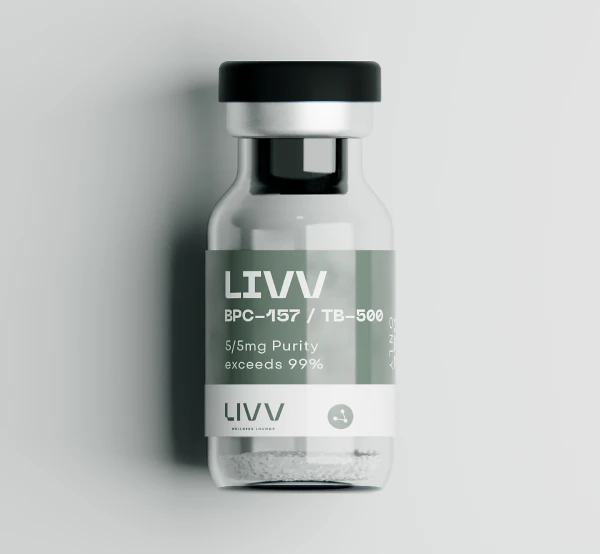
- Lyophilized (freeze-dried) vials: typically require reconstitution with sterile diluent. This format is common for BPC-157 and TB-500 discussions.
- Pre-measured bundles: kits that group vials and provide suggested schedules. These vary widely in clarity and documentation.
- Concentration-stated liquids (less common in this category): when offered, they still require careful handling and have variable transparency.
What quality standards to look for (practically):
- Batch-specific documentation (e.g., COA/third-party testing) with matching batch numbers.
- Clear concentration and labeling (how many mg per vial, total volume after reconstitution).
- Storage and shelf-life instructions that are consistent with the peptide form.
- Reconstitution guidance that is specific enough for safe handling (and matches the label concentration).
Cost note (typical consumer ranges): Prices vary by vendor, vial size, and documentation quality. In many marketplaces, a woman might pay anywhere from “budget kit” levels to “premium lab-tested” levels depending on batch testing and reconstitution instructions. If you see very low pricing combined with vague labeling and no batch proof, treat it as a red flag.
Comparison of Common Options
Below is a general comparison of how people commonly structure product choices. “Typical dose/use” is written conservatively as a consumer framework, not as a medical prescription.
| Format | Typical Dose/Use | Pros | Cons | Cost | Best For |
|---|---|---|---|---|---|
| Single-vial BPC-157 (reconstitutable) | Start low; follow vial concentration and a short trial cycle (often 2–4 weeks) with tracking | Lower complexity; easiest to attribute changes | Doesn’t address “stack” intent | Often mid-range per month | Women who want the simplest entry point |
| TB-500 single-vial (reconstitutable) | Conservative start; monitor local comfort and side effects over 1–3 weeks | Clearer attribution than multi-component stacks | Evidence for your exact use case still uncertain | Often mid-range | Women focused on a single target area |
| GHK-Cu vial bundle | Often used as an add-on; conservative trial rather than starting “full stack” day one | May align with those seeking broader support | Can complicate cause-and-effect if used immediately | Often premium vs single components | Women who want staged stacking |
| Pre-packaged “Wolverine stack” kit | Vendor schedule; conservative users may shorten or reduce frequency | Convenient; schedule included | Label schedules can be aggressive; transparency varies | Varies widely; often higher than singles | Women who want structure but will still be cautious |
| Lower-dose “starter” multi-vial option | Designed for trial; often the lowest-risk way to learn your tolerance | Lower commitment if you stop due to side effects | May feel “too small” if you expect faster change | Budget to mid-range starter pricing | Women prioritizing safety signals over speed |
Buying Framework and Red Flags
If you want your TB-500 and BPC-157 Wolverine stack dosage guide search to result in a safer decision, treat buying like a QA process.
- Request batch proof: Look for batch-specific COA or third-party testing.
- Check labeling clarity: Confirm mg per vial, final reconstitution volume, and concentration.
- Assess vendor transparency: Do they explain storage, handling, and reconstitution steps?
- Beware “guaranteed results” language: If a page promises cure or instant recovery, it’s not an evidence-based consumer fit.
- Watch for suspiciously low pricing: Cheap + vague documentation is a common mismatch.
- Look for consistent formatting: Conflicting dose units or unclear instructions are a sign to pause.
- Confirm return policies and customer support: Not proof of safety, but it helps if something arrives damaged.

Common Mistakes and How to Avoid Them
- Starting with the full stack: Many women do better with staged testing—learn tolerance first before adding GHK-Cu to the mix.
- Changing workouts too fast: If you improve local comfort, that can trick you into accelerating loading. Keep training changes gradual and consistent.
- No baseline tracking: Without a simple log (pain score, ROM, steps), you can’t tell whether you improved from routine changes or the stack.
- Ignoring stop rules: If side effects appear, stop and reassess. “Push through” is rarely the most consumer-sensible approach.
- Assuming injection is automatically “stronger”: Route and dosing precision matter; “more” doesn’t automatically mean “better.”
- Unit confusion after reconstitution: Use label concentration math carefully; if the routine depends on complex calculations, double-check before first use.
FAQ
Is it proven that a GHK-Cu, BPC-157, TB-500 Wolverine stack dosage guide works for recovery?
Not in the way most people mean by “proven.” There is biological and preclinical discussion for several components, but strong human evidence for the exact stack, dosing, and schedules is limited. Consumer outcomes vary, so treat it as a cautious experiment rather than an evidence-backed guarantee.
How long does it take if I start a TB-500 and BPC-157 Wolverine stack dosage plan?
When people report changes, they often describe a timeline of roughly 1–3 weeks for early signals, with clearer patterns by weeks two to four—especially when paired with consistent baseline recovery behaviors. If nothing changes after a couple of weeks and you’re tolerating it poorly, many users choose to stop rather than extend indefinitely.
What are common side effects from GHK-Cu, BPC-157, TB-500 (and when should I stop)?
Commonly discussed non-specific effects include headaches, fatigue, and feeling “off” day-to-day. If side effects are new, persistent, or worsening—especially with sleep disruption or mood changes—many cautious consumers stop and reassess. If you have medical conditions or are on medications, get clinician input.
Can I combine GHK-Cu, BPC-157, TB-500 with supplements or physiotherapy exercises?
Often, people do combine these with routine recovery habits like physiotherapy, protein-focused nutrition, and mobility work. The issue is attribution: adding many variables at once makes it hard to know what’s helping or causing problems. A consumer-friendly approach is to keep other factors stable for the first 1–2 weeks, then adjust only one thing at a time.
Is oral GHK-Cu, BPC-157, TB-500 available, or is injection required for best results?
Oral and alternative formats are sometimes discussed, but “best results” isn’t something a reliable consumer can claim because evidence quality varies by route and product. Injection/reconstitution is common in how these peptides are sold and discussed, but that also increases the importance of precision, sterile handling, and correct dosing math.
A Practical 2-Week Experiment Framework
If you want to follow a GHK-Cu, BPC-157, TB-500 Wolverine stack dosage guide without treating it like a blind leap, use a short, trackable experiment. This is written for consumer structure, not medical advice.
Before you start (day -2 to 0):
- Write your baseline: pain score (0–10), range-of-motion notes, and daily function (steps or activity).
- Choose one “stop rule,” like: “If I get headaches/fatigue that disrupt normal function, I stop.”
- Pick conservative handling and a schedule you can actually maintain.
Days 1–7:
- Keep everything else stable: same sleep routine, same mobility plan, and avoid major workout changes.
- Log daily: side effects, sleep quality, and whether your target area feels “more workable” than usual.
- If you’re staging (often the safest learning approach), consider starting with one component and waiting before adding the rest.
Days 8–14:
- Look for patterns, not single-day wins. One good day isn’t proof.
- Compare week two to week one: What changed in real function (stairs, walking tolerance, stiffness timing)?
- If you had side effects in week one and they persist, stop rather than “pushing through.”
- If you saw no meaningful change and you’re tolerating poorly, stop or reduce complexity (for example, remove one component).
What would count as “success” at 2 weeks (consumer definition): modest improvement in comfort or function and stable tolerance—not dramatic transformation. If it’s purely side-effect-only, that’s a clear signal to stop.
About the Author
Jules Hart, founder of Womens Wellness Dosage Desk, is a health-writer and former consumer reviewer who spent the last several years turning complicated supplement-style routines into plain-language decision checklists. Her review work focuses on dosing clarity, labeling transparency, side-effect logs, and how people measure “real-world change” instead of marketing promises. She also tracks failure cases—when a stack doesn’t help or causes adverse feelings—so readers can see both outcomes.
Disclaimer: This article is informational and experience-oriented, not medical advice. Peptide-like products and injection routines can carry risks and may not be appropriate for everyone. If you’re pregnant, breastfeeding, managing a medical condition, or taking medications, consult a qualified clinician before starting any regimen.
Discussion